


Curatorial & Critical Practice
Alongside the performative work, Chiara Gelmini develops curatorial projects and critical interventions that extend her artistic research into spatial, relational and exhibition contexts.
Her curatorial approach treats exhibitions not as containers of artworks, but as dramaturgical structures in which space, rhythm and encounter become active elements.
Curate
Write
Curate
Curator
Vicini/Lontani
Casa de Stabile, Trieste (2012)
Concept
The exhibition explored proximity not as physical adjacency, but as a perceptual condition.
What does it mean to be “near”? When does distance become necessary?Rather than presenting works as isolated objects, the exhibition unfolded as a sequence of spatial tensions and visual pauses. Each placement, interval and threshold was conceived as part of a broader dramaturgy, inviting visitors into a slower, more attentive mode of encounter.


Other artists involved: Cristina Battistin, Tiziano Bole, Paolo Cervi-Kervischer, Andrea Medeot, Valentina Milan.
The Curatorial Device
Spatial sequencing, visual counterpoints and calibrated distances between works generated a rhythm of approach and withdrawal.
Light, circulation paths and moments of interruption were designed to destabilise habitual modes of viewing, allowing proximity to emerge as a dynamic and shifting condition.
The domestic architecture itself became an active element — not a neutral container, but a participant in the perceptual dialogue.
Outcomes / Impact
Vicini/Lontani functioned as a space of shared reflection rather than a static display.
Visitors were invited to question their own perceptual frameworks and relational positioning within the space.
The project expanded curatorship beyond selection and display, framing it as a relational and performative practice — one capable of activating temporary communities of attention.
Conceived, curated and independently produced by Chiara Gelmini, Vicini/Lontani was an artistic intervention investigating the fragile boundary between proximity and distance — both spatial and relational.
The project transformed a vacant domestic space into a temporary performative ecosystem, where artworks, spatial arrangements and embodied presence interacted as a single narrative structure.
Memorie di un museo.
Il racconto della Grande Guerra (1924-2024)
Palazzo Attems, ERPAC Gorizia (2024)
For the exhibition “Memories of a Museum. The Story of the Great War, 1924–2024”, Chiara Gelmini contributed to the development of the curatorial concept for the final exhibition room and supported the logistical coordination and installation process.
She also conceived and organized a related concert event designed to expand the visitor experience and foster a dialogue between historical memory and live performance.
The exhibition design has now been selected among the thirty best Italian exhibition design projects of the year 2025 and has entered the pre-selection for the Compasso d'Oro award (ADI Design Index)

Write
Writing · Criticism
Chiara Gelmini’s critical writing engages with contemporary art, animation, performance and film through direct observation and active participation in the cultural field.
Her articles, published on Bora.la, reflect an ongoing dialogue with both major international events and independent contexts, combining analytical depth with a practitioner’s perspective. She has been accredited as press at festivals including the Annecy International Animation Film Festival, La Biennale di Venezia, Trieste Film Festival and Trieste Science+Fiction Festival.
Her writing is driven by a sustained curiosity for contemporary practices and emerging forms, with particular attention to interdisciplinarity, visual culture and the evolving languages of performance and animation.
Press Accreditations — Annecy IFF · La Biennale di Venezia · Trieste FF · Trieste Science+Fiction FF
Selected Articles:

A field report from the Annecy International Animation Film Festival, capturing the atmosphere of the world’s leading animation event. The article combines industry insight, artistic observation and reflections on emerging trends in contemporary animation.
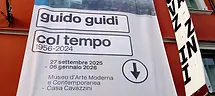
An in-depth reflection on Guido Guidi’s photographic research, exploring the subtle tension between landscape, time and perception. The article examines how silence and alignment become structural elements in a practice rooted in attentiveness and duration.

A report from Trieste Science+Fiction Festival highlighting the growing resonance of animation within contemporary film culture. The piece reflects on audience reception, industry dialogue and the evolving place of animated cinema in international festivals.
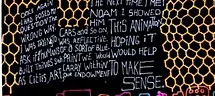
A critical reading of Michel Gondry’s animated dialogue with Noam Chomsky, examining the relationship between philosophy, language and animation as a medium of thought. The article explores how drawing becomes a tool for intellectual inquiry.